
Paths & Trails
Old Ruined Settlement
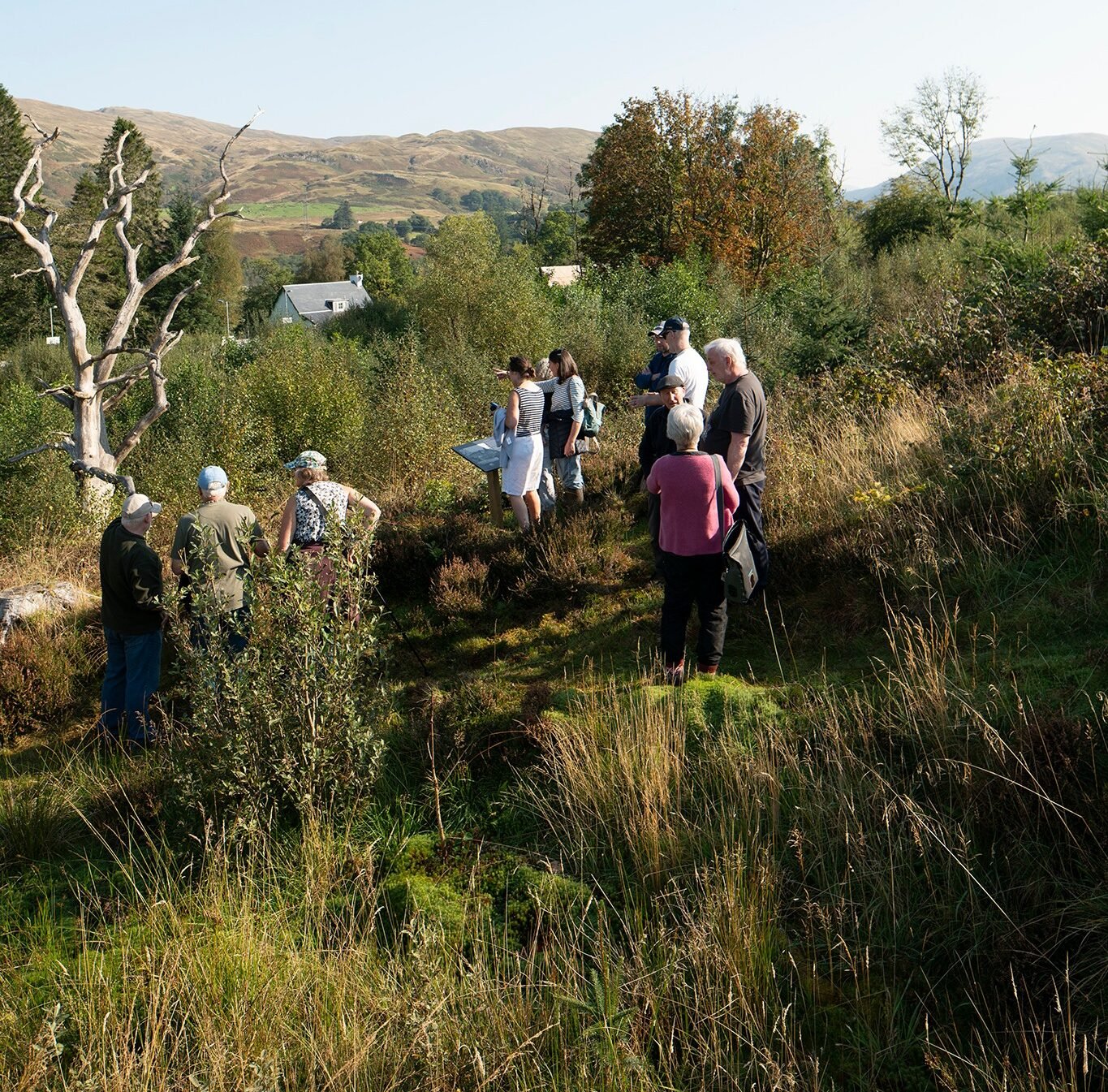
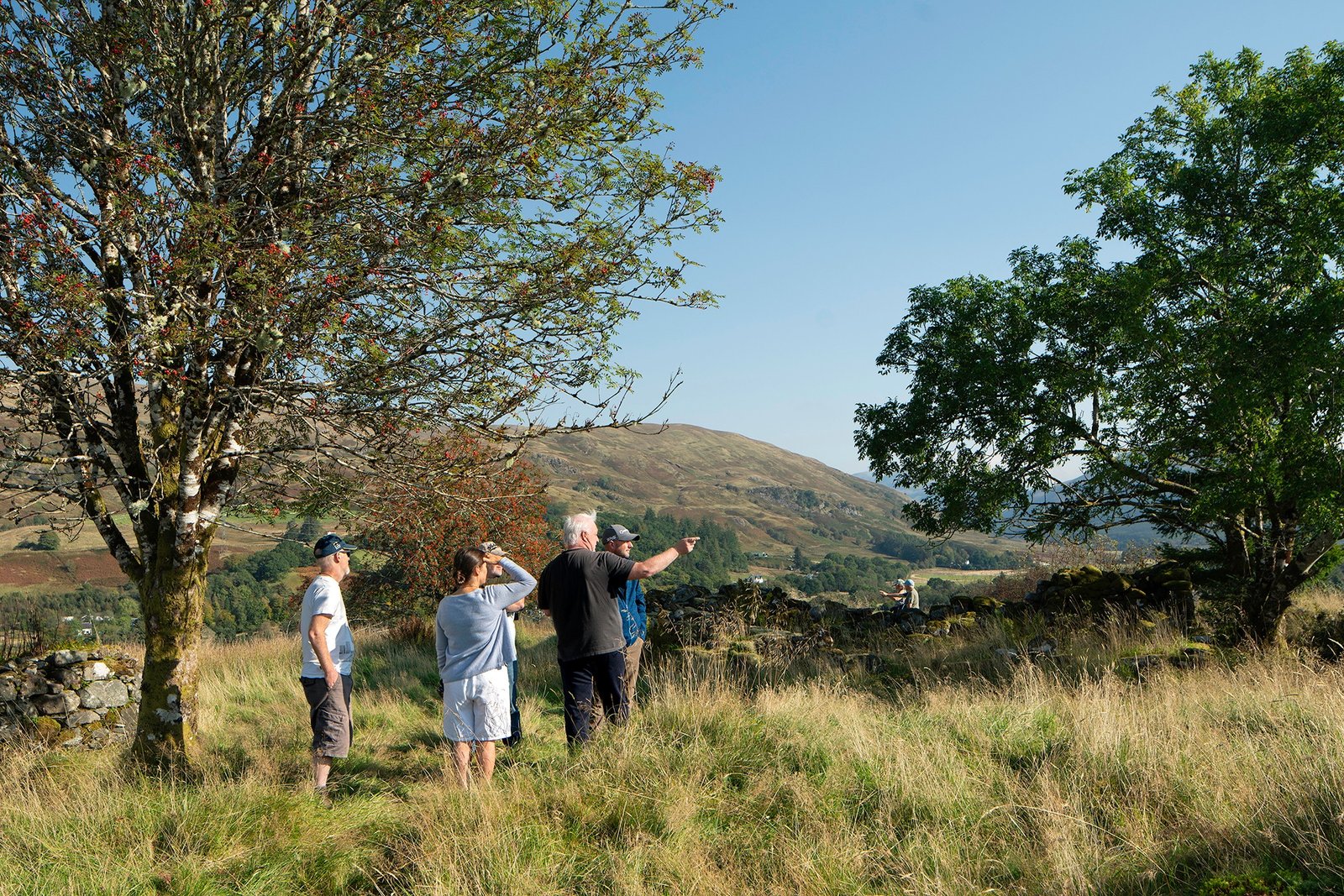
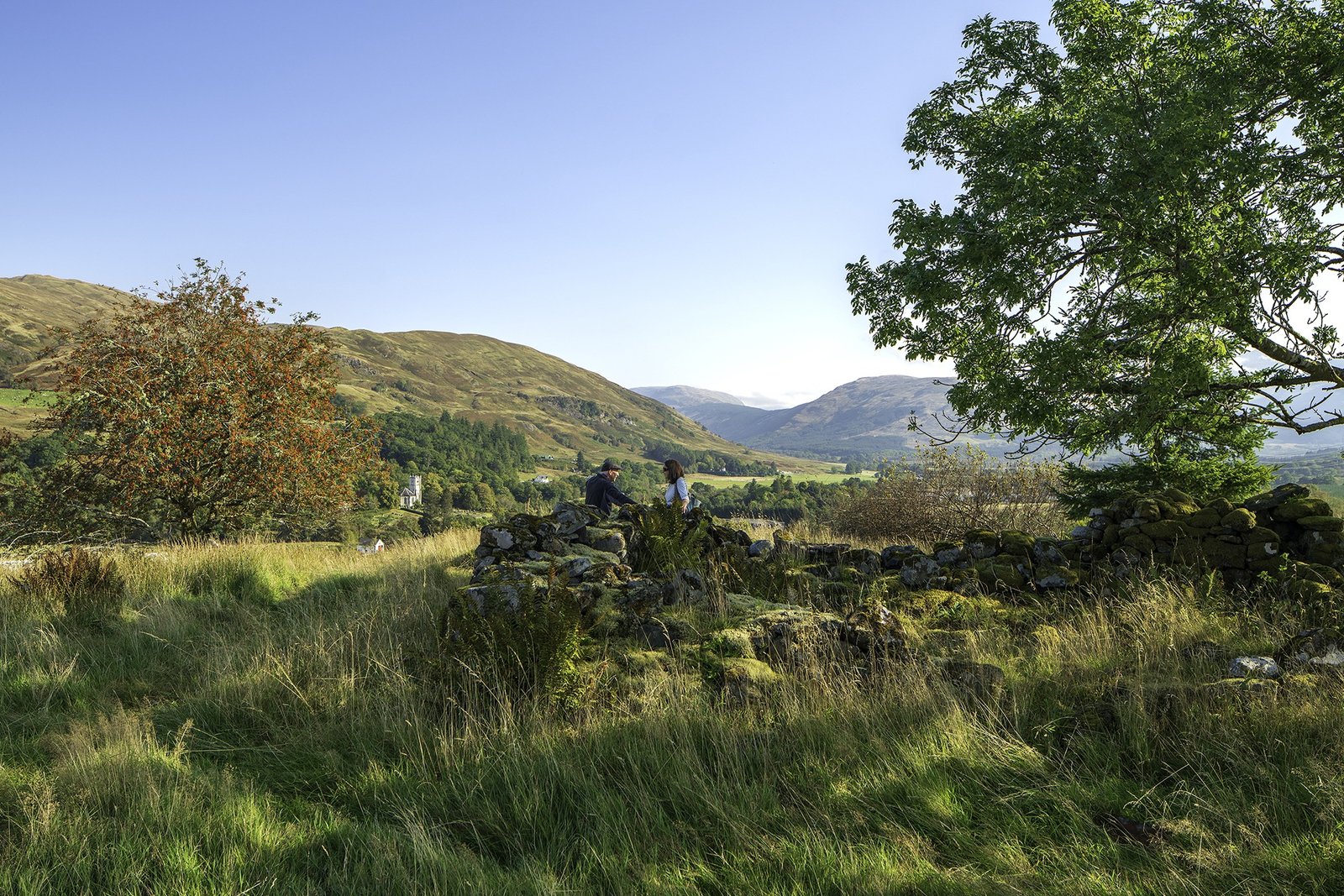
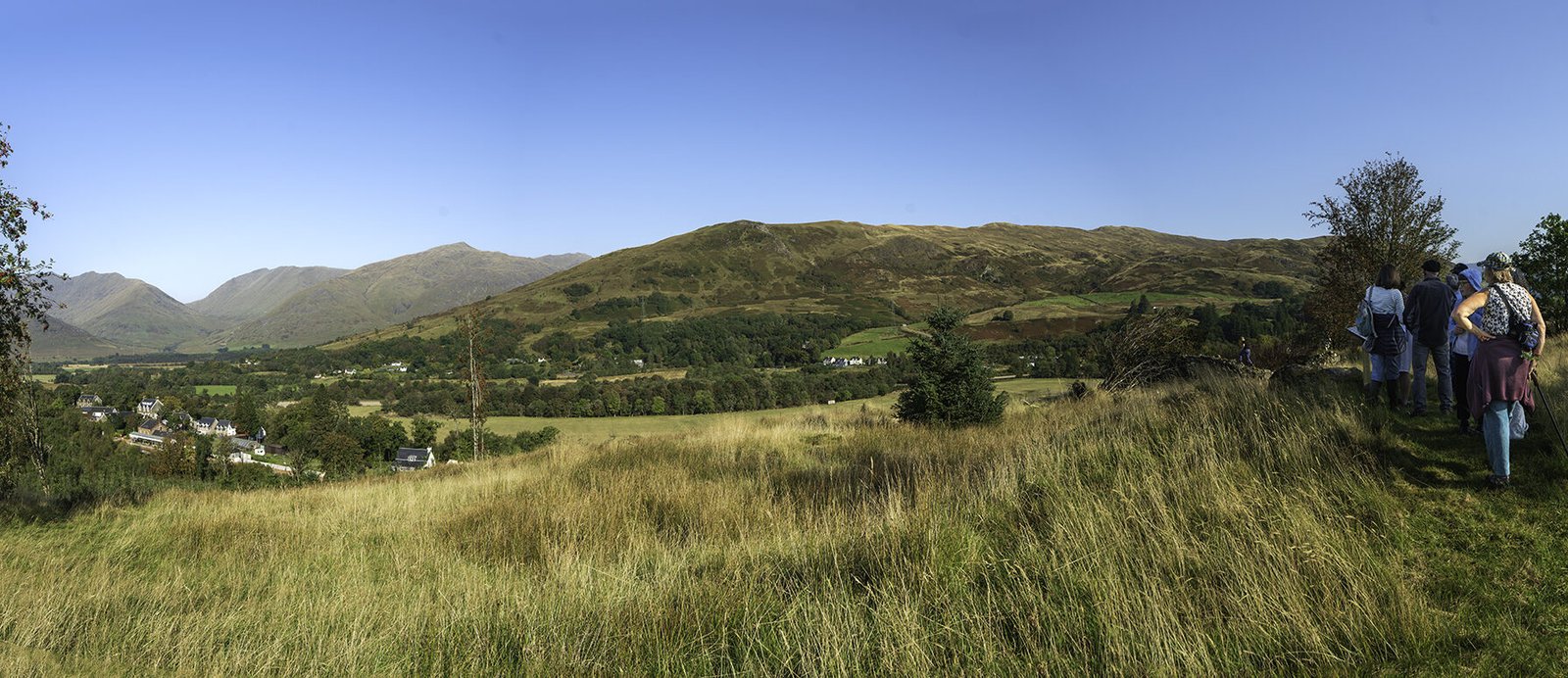
*The site is a little dangerous since Tilhill Construction have harvested trees.
From Station turn left and enter Monument Hill crossing the bridge over the track. Turn left into lane to barrier entrance to forest track. Turn LEFT immediately through fence chicane and climb up through old oak wood to clearing and summit. The ruined dwellings here were inhabited by the MacNab Clan (smiths & armourers to Kilchurn Castle) for more than 400 years. Last inhabitants are said to have come down some fifty years age. The site is also a prehistoric settlement or ‘dun’, the outlines of which are clearly visible. Nice views over the glen.
Path continues, skirting the right hand side of the ‘dun’, through forest to regain the forestry track.
Now you have a choice : TURN RIGHT along track and then, after 300 yards, RIGHT again and you will come gently home.
Paddy's Point
Cross track and *climb steps up to summit. A stiff climb but worth it for spectacular views over Loch Awe and Ben Cruachan. The old Scots pines and great beeches make it a landmark.
*Trees have fallen and obstructed the steps to Paddy’s Point. A longer clockwise approach is advised.
Duncan Ban Monument
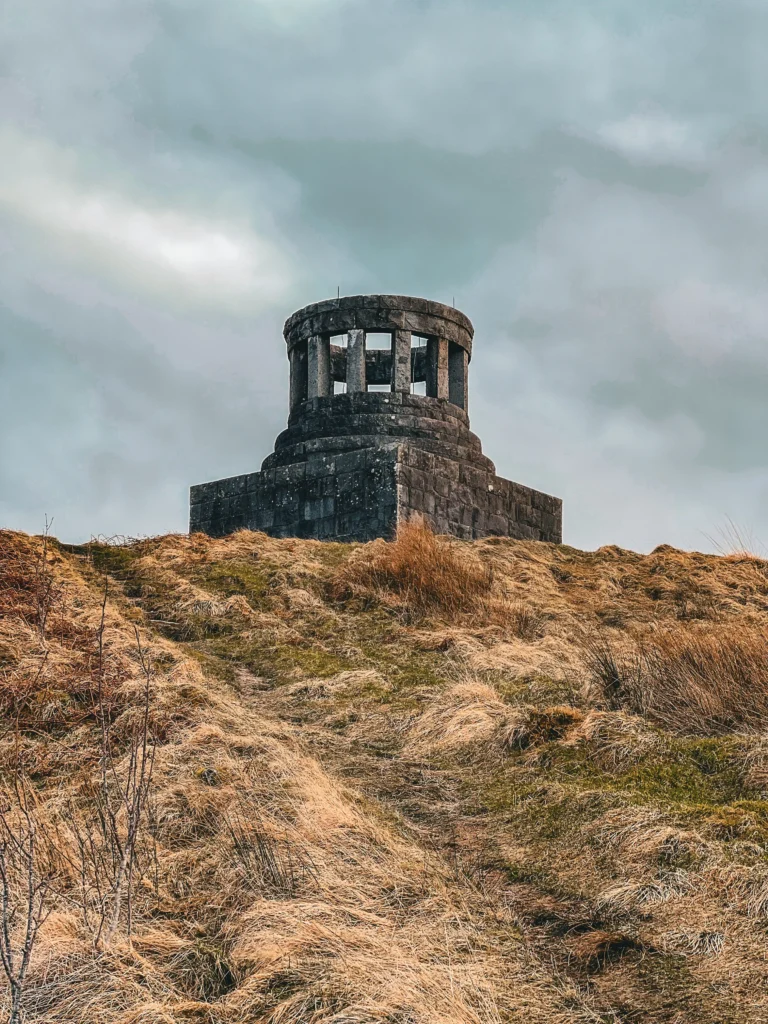
(1 to 1½ hours)
Enter Monument Hill and follow Old Military Road to top. Road was built by English soldiers around 1750 as part of a network aimed at pacifying the Highland clans and is still well-maintained as far as the monument, which stands on the highest point, an old beacon hill (550 feet above sea-level)
The granite rotunda was erected in the 19th century to celebrate Dounchadh Ban McIntyre, the Robbie Burns of the Gaels. ‘Fair’ Duncan was born in a now deserted township in Glen Orchy, near Loch Tulla, in 1724. He fought ingloriously at the Battle of Falkirk (1745) on the ‘wrong’ side and composed a humorous song about it which pleased the Earl of Breadalbane, who appointed him stalker on his forest of Ben Dorain. He worked there some 20 years and composed his greatest songs – ‘Song of the Misty Corrie’ and ‘In Praise of Ben Dorain’ among others.
We like to think that his popularity was in part due to his spirited defence of people against sheep during the traumatic times of the Highland clearances : (in translation)
‘My blessing with the foxes dwell
For that they hunt the sheep so well.
Ill fa’ the sheep, a grey-faced nation
That swept our hills with desolation!….
A partly resurfaced track at the bottom of Duncan Ban’s hill, skirting the TV mast emplacement, offers a continuation of your walk down to the A819, Inveraray road.
Kilchurn Castle via Stronmilchan Village
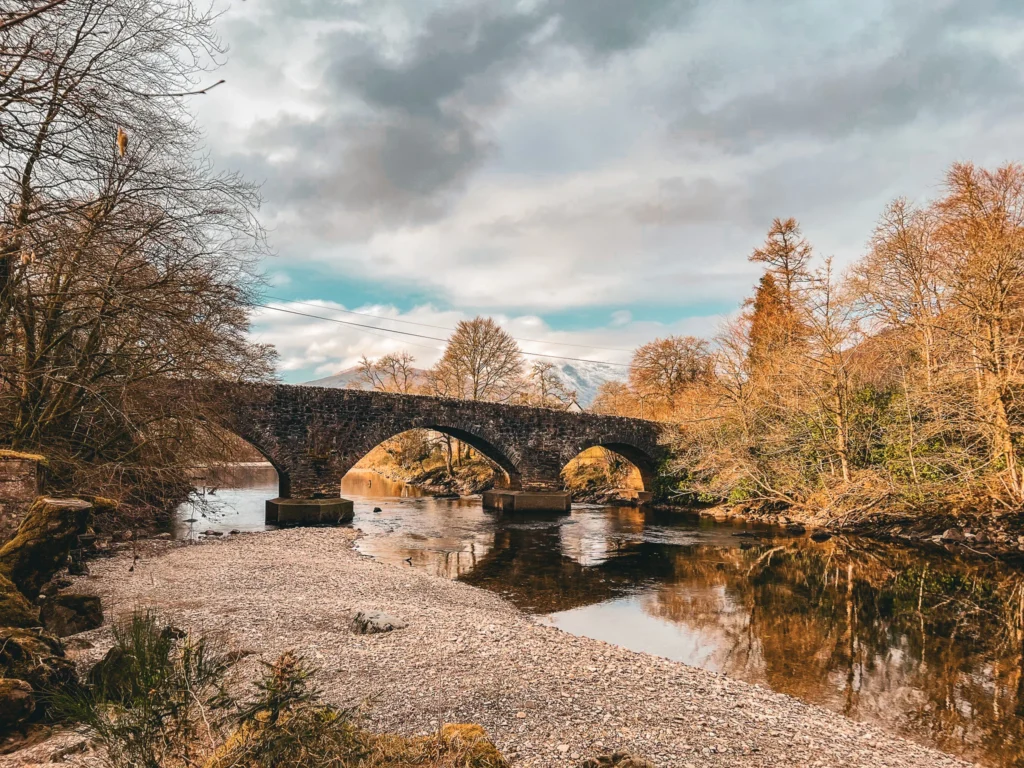
(2-3 hours)
Proceed as for Walk 5 and continue left after Dalmally Bridge. This is the old high road to Bridge of Awe, via the Brander Pass. The land-use pattern of a crofting township is clearly visible both to the left and right as the road leads you out towards Ben Cruachan and Ben Einidh. On the right, as the township ceases and the electricity pylons climb the hill, is the site of the Great House of Clan McGregor, who disputed unsuccessfully with the Campbells for supremacy in these glens.
The road does a dog-leg bend at the river Strae, where there are 2 more bridges. There is a beautiful pool at this point. The road turns SW and you soon reach the main Oban road. You turn LEFT here and make a run for it! over the bridge to the access point to Kilchurn. Watch out for traffic on the road and trains on the level-crossing. The 15th century castle, built for Black Colin Campbell, is largely a ruin but you can get access to the interior during office-hours in the season.
Glen Strae
(1 hour)
Proceed through Stronmilchan as above.
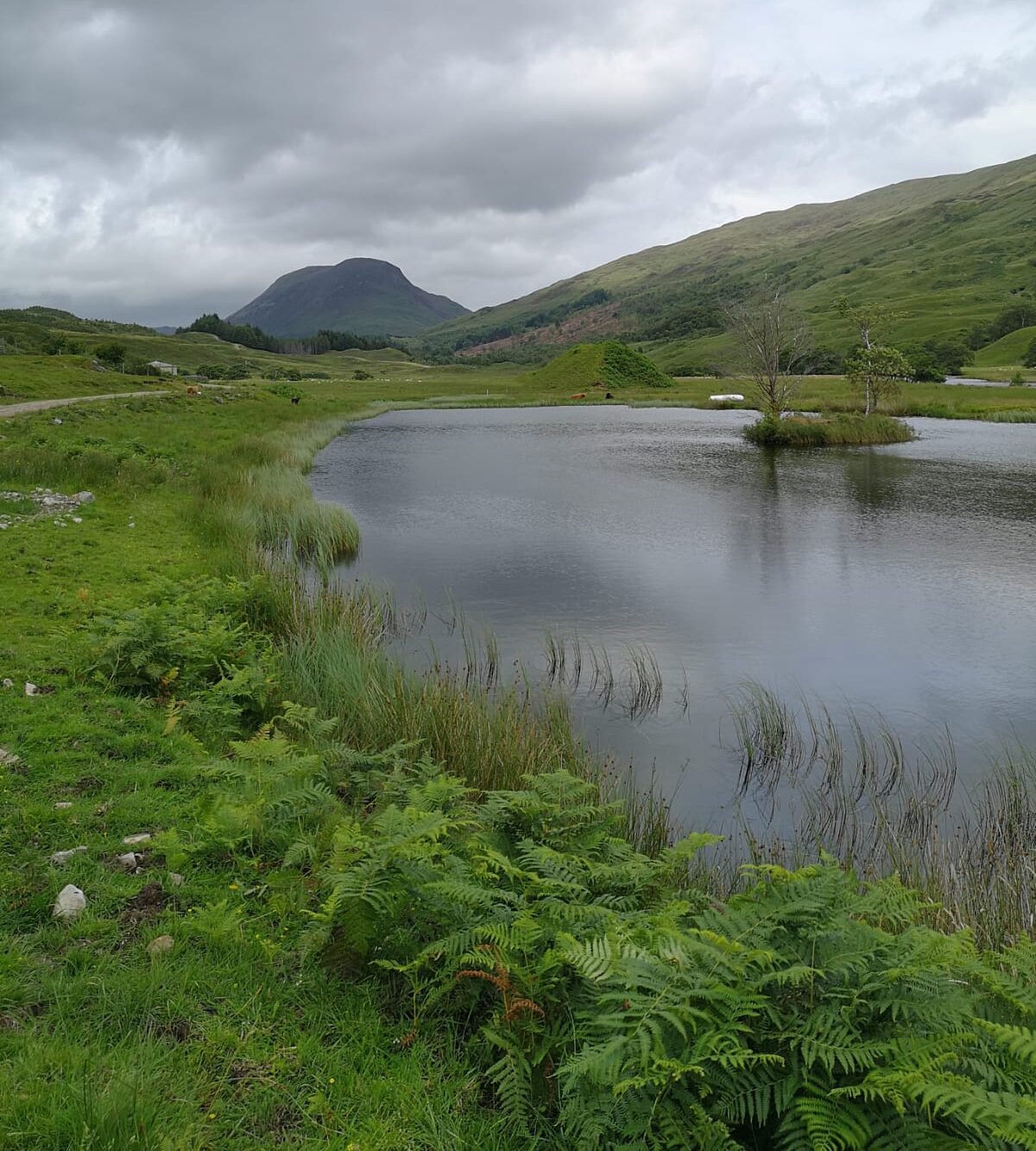
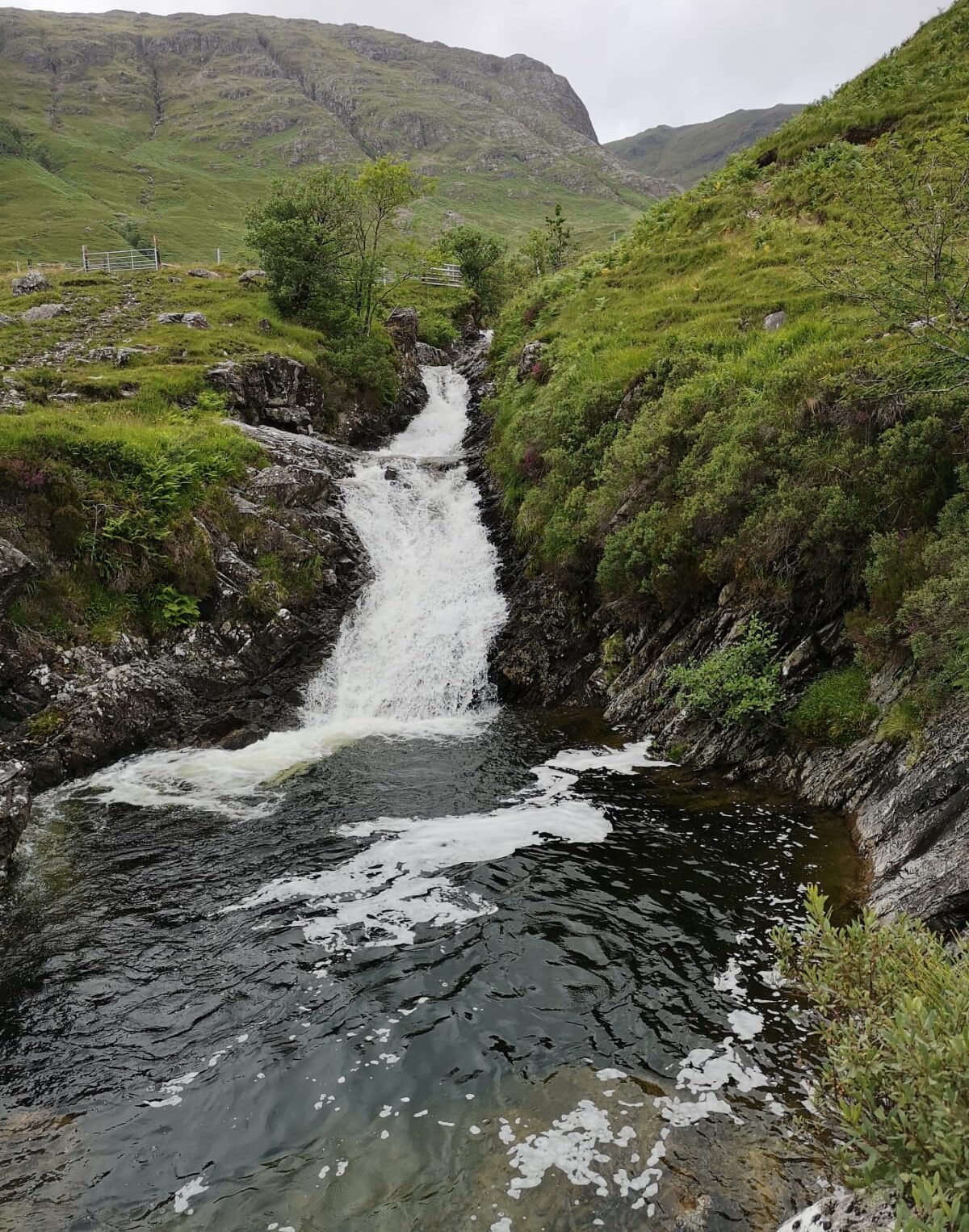
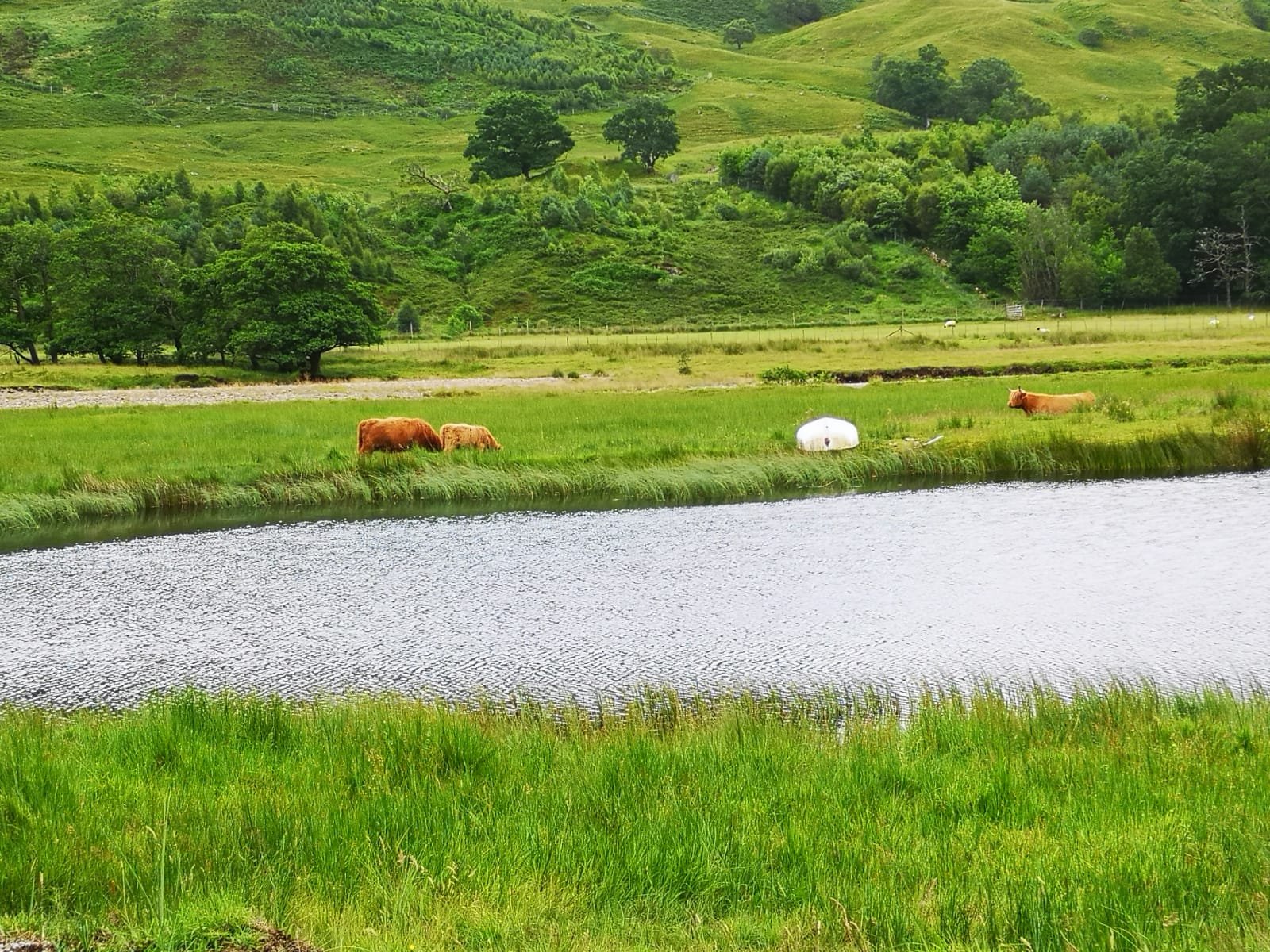
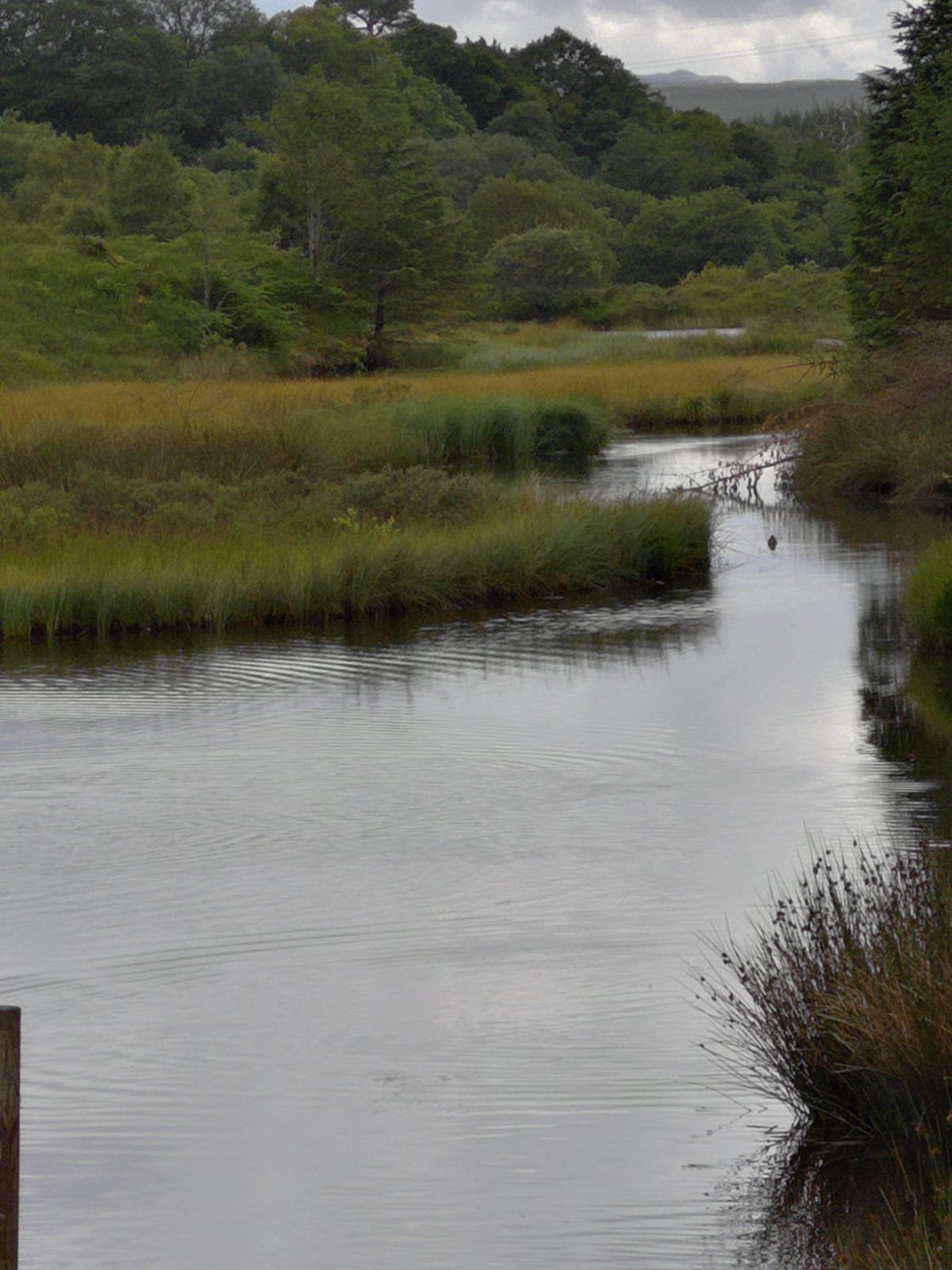
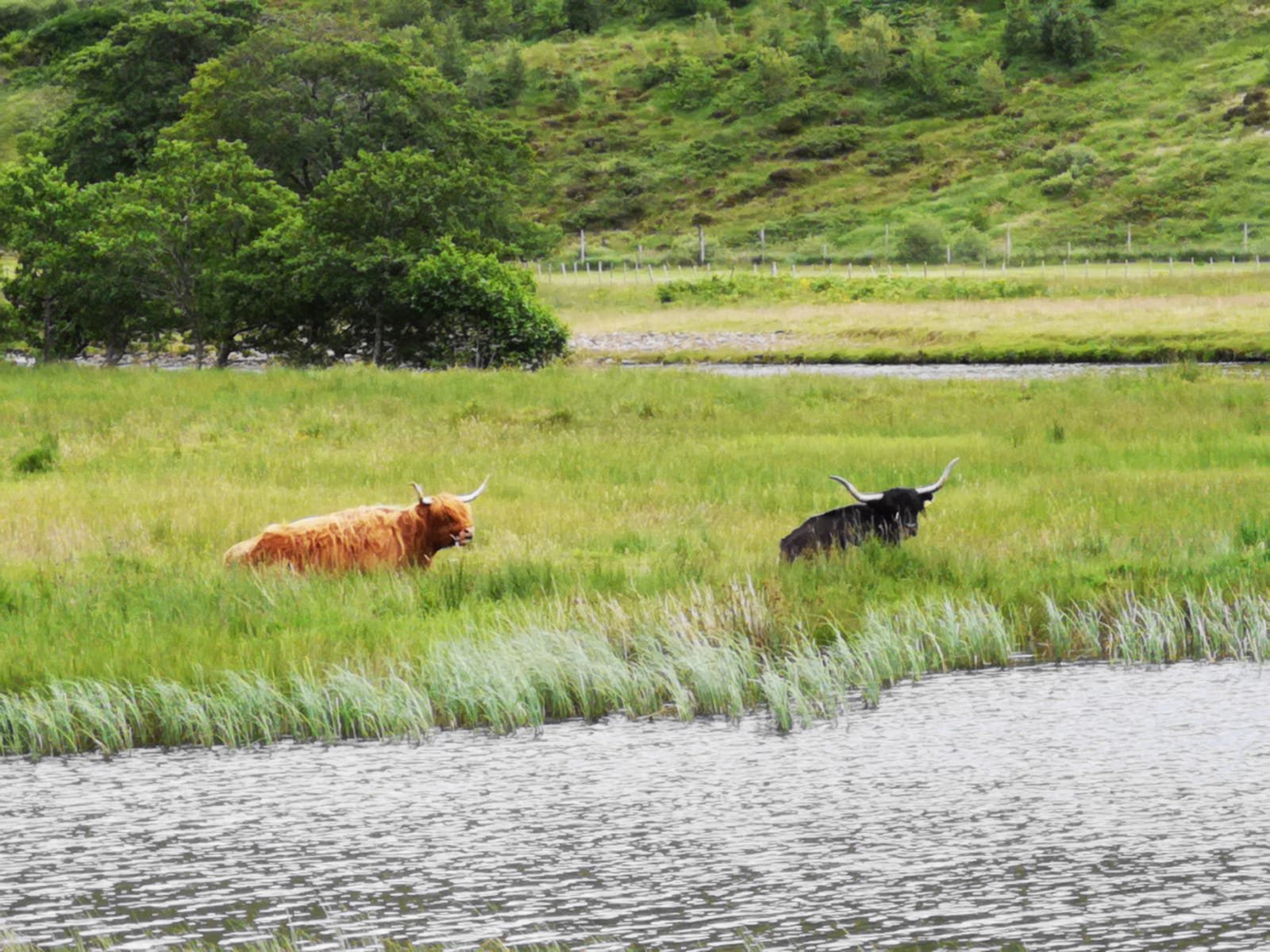
At dog-leg turn and bridges enter big farm gates and bear right. Follow main track (the track to Duiletter is private) to attractive waterfalls and pool. The glen is a tranquil place now, inhabited by only one family. In earlier times it was the home of the Clan McGregor, then the Campbells, and could easily raise a hundred fighting men.
Ben Cruachan's Lower Slopes
(up to 3 hours)
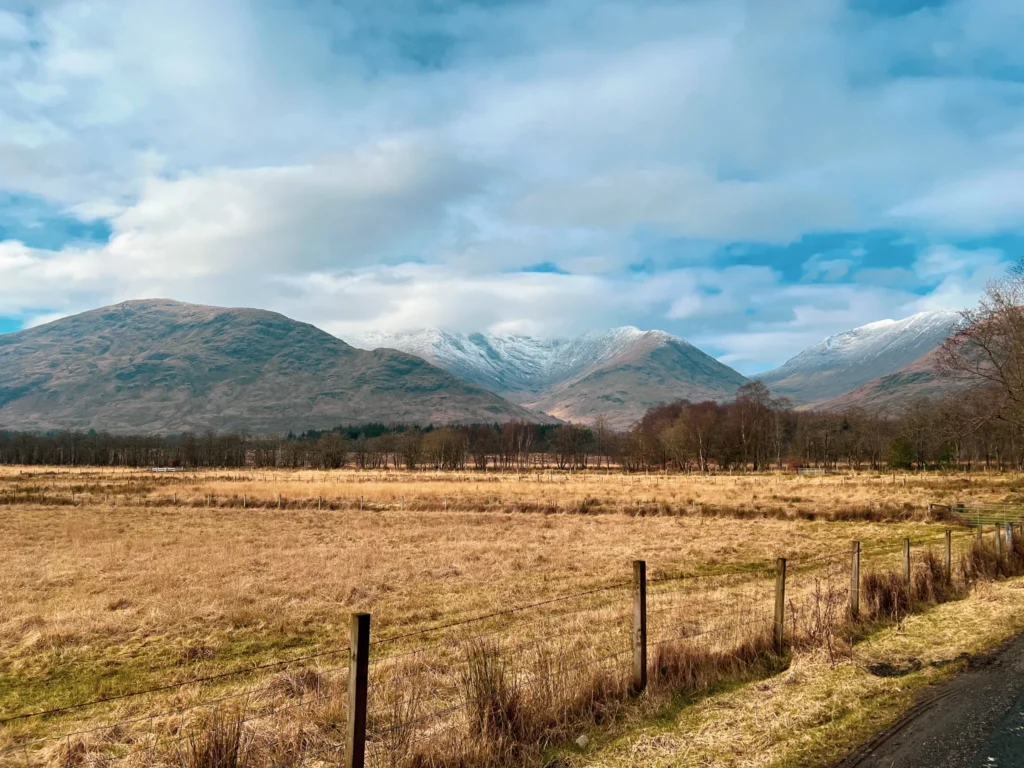
Where the Stronmilchan Road joins the A85 Oban road just beyond Kilchurn Castle (Walk 6), there is a gate leading on to a track which skirts the mountain’s lower slopes. This is a lovely walk in open countryside and need not be too strenuous.
After 30 minutes and two gates you see the course of a river going diagonally LEFT up towards Cruachan. Follow the river for a while (beautiful falls and pools) and you will see a footbridge onto the open slopes.
Parish Church and 18th Century Bridges
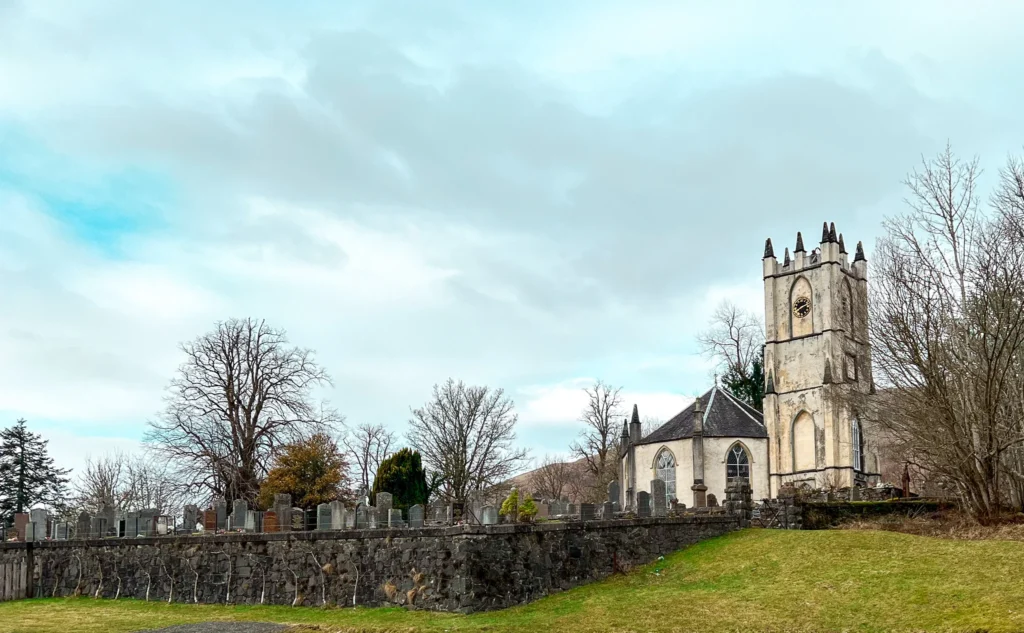
(45 minutes)
From Dalmally Railway Station proceed down hill past the old Drill Hall on right to main road. At Glenorchy Lodge Hotel (nice pub) turn RIGHT. Pass by cattle mart and shinty field on left to Dalmally Hotel. (Not much left of the original, which was praised as early as 1785 by a traveller as the only decent hotel for miles.) At Hotel turn LEFT.
There are two bridges because the River Orchy has split in two forming a kind of island on which the early 19th century church stands. The old Gaelic name for the island is Clachan Deseart (‘hermit’s or saint’s community’), so we may presume that Dalmally was a sacred place from earliest times.
Inside, the church has an interesting Laird’s loft on a timber colonnade and the churchyard has grave-stones relating to both Breadalbanes and MacNabs. On the pretty river bank, below the fine second bridge, is a post showing how the floodwaters from the higher reaches of the Orchy can push up the water level at times.
From here you retrace your steps, unless you wish to extend your walk to Stronmilchan (1½ hours; turn LEFT over bridge) or Craig Lodge (30 minutes turn RIGHT). Formerly a hunting lodge, Craig Lodge is now a Catholic House of Prayer, Youth Community and Retreat Centre, welcoming all denominations; you are welcome to visit the house and lovely garden.
A short distance along the main road to Crianlarich is Glen View, where there is a pottery, a well-stocked General Stores and a modern Primary School. The original village school is a few steps further along the main road and, before it, down below the road level, lies St Conan’s Well. Look for a fenced-off, landscaped descent opposite the police-station).
Climbs
Beinn Laoigh - Ben Lui
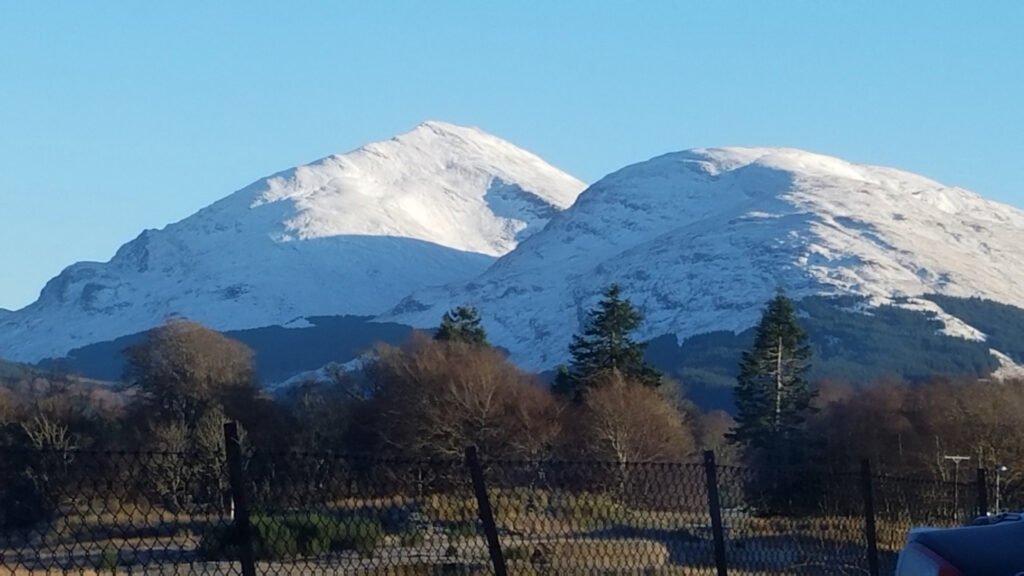
The eastern face of Beinn Laoigh can be seen from the bridge crossing the Fillan on the Crianlarich to Tyndrum road. Nearby, the old schoolhouse at Dailrigh (now used as a barn) lies at the start of the Cononish track. This leads to a sheep fank on the Allt an Rund. Either of this burn’s tributaries can be followed into the mouth of Coire Gaothaich, where there is a choice of routes. On either hand, short spurs abutting the summit ridge climb to narrow rocky crests, each leading to a small conical top. The summit, seen to the left, is marked by a large, untidy cairn. The hanging coire is dominated by the steep couloir of Central Gully, which is a traditional and popular ascent route in winter for the competent mountaineer.
On the shorter approaches from Glen Lochy, the walker has to negotiate forestry plantations. Start from a car-park opposite a railway bridge spanning the outfall of the Eas Daimh. This is near its confluence with the River Lochy, which is fordable, but there are footbridges to the east and west. That to the east, near the site of the old Glenlochy Crossing signal box (Grid Reference NN 255295), by a stand of mixed trees, was the traditional starting point for the ascent. A newer structure to the west is difficult to see from the road, as it is almost hidden by a small mound. A useful point of reference is a short section of the old road to the north of the present highway. Nearby, a little to the east, a poor path crosses heathery ground in the direction of a hut, seen on the opposite side of the railway.
From both bridges follow the railway to a stile immediately east of the Eas Daimh bridge. A path, following the left (north) bank of the burn, climbs past a footbridge below the Eas Morag waterfall. Keep to the north bank of the burn, to a stile in the fence at the foot of Ciochan Beinn Laoigh, or cross the burn where it is joined by its largest tributary. The tributary is then followed for a time, and then the path steepens in a firebreak to reach open ground in the Fionn Choirein. At times of spate, cross the Eas Daimh by the Eas Morag footbridge and follow its western bank to a plank bridge on the tributary. Above the forest fence (stile), a useful exit through the coire headwall is by a patch of rough scree, seen to the left of the broken face of Beinn a’ Chlèibh. Grassy tiers rise to a col, where, turning to the south-west, along the line of the coire’s rim, a short climb leads to the cairns of Beinn a’ Chlèibh. The steeper climb to the north-east leads to the summit of Beinn Laoigh.
A more interesting approach to Beinn Laoigh is that along the Eas Daimh (stile in an angled section of the fence close to the burn). Above the trees, craggy bluffs on Ciochan Beinn Laoigh can be turned on the right. This steep, grassy nose rises to a ridge crest which narrows gradually to the cairned point of the northern summit, above Coire Gaothaich. A short walk along the lip of this great scoop leads to the higher southern top.
Beinn a' Chlèibh - Ben Lui
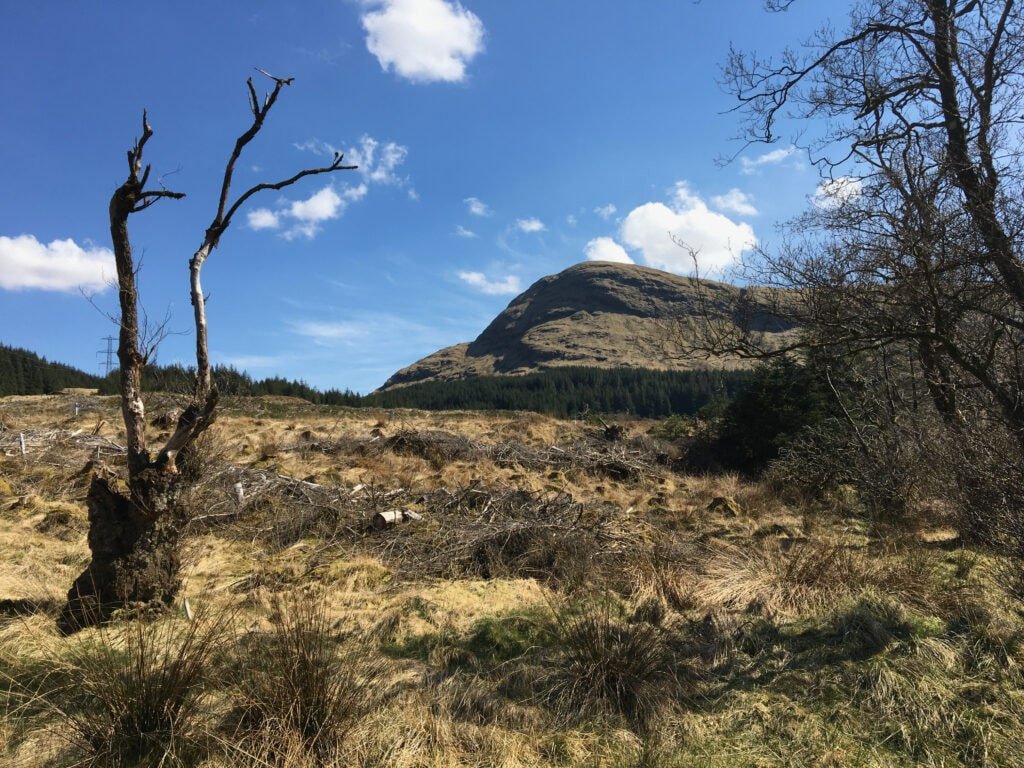
The easiest route to Beinn a’ Chlèibh is by way of the Fionn Choirein as previously described. The steep north-east slopes overlooking this coire are not really suitable for ascent or descent. The mountain’s long western ridge, immediately above Succoth Lodge, is a mass of trees, and nowadays the only route through them starts at the westerly river crossing to the railway hut. From this point, follow the fence to the right until the first angle in it is reached. Continue along a boggy firebreak, which runs straight up the hillside to a stile on the forest boundary. The roughened face of Creag na Cloiche Gile (on the left) is then avoided by continuing above the fence to the top of a broad shoulder, almost due west of Beinn a’ Chlèibh’s summit. Two small cairns mark the top of the easy grass ridge, and on the approach to the mountain’s level crown, several cairns are seen, the largest one, on a flat rock near the south-eastern edge of the plateau, would appear to be the highest point. Other piles nearby are useful guides in mist, indicating the proximity of the broken eastern face. The most southerly pile marks the turn onto the Stubby ridge dipping to the col at the head of Fionn Choirein.
Beinn Os - Ben Lui
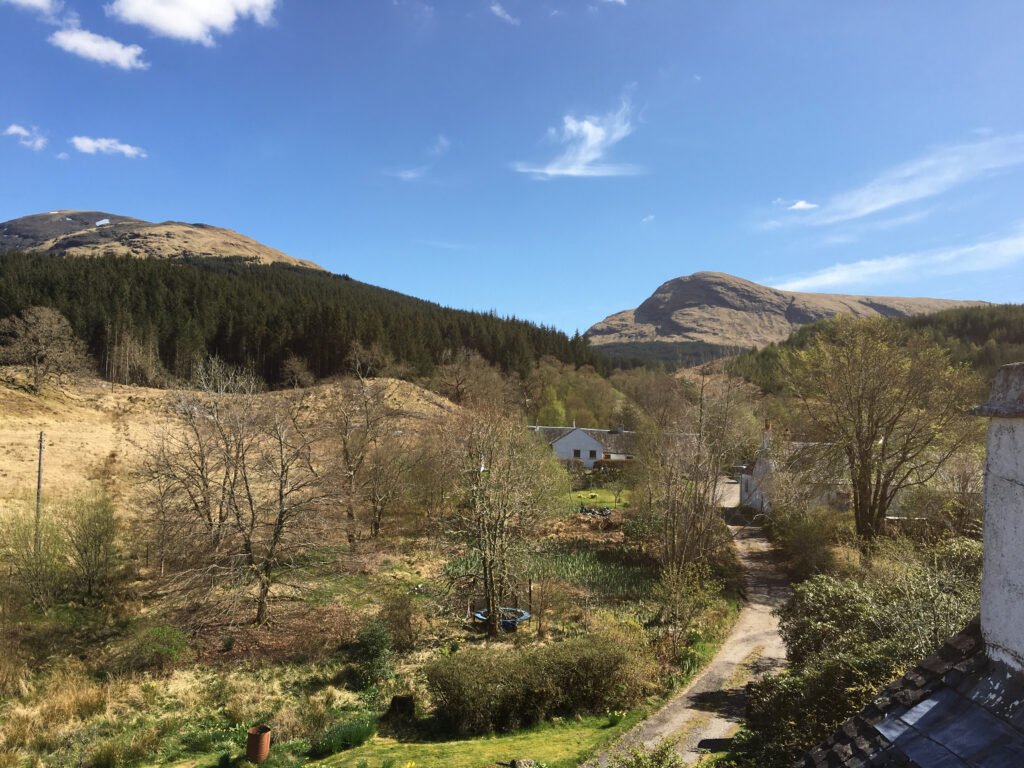
Beinn Os and its near neighbour, Beinn Dubhchraig, when not included in a greater traverse of the four peaks in the group, are usually climbed from Dailrigh.
An east-west traverse seems to be preferred as the prior ascent of Beinn Dubhchraig gives an easier start to the day. The near-vertical slopes above the Allt Coire Laoigh preclude any sensible attack on Beinn Os from that quarter, though the climb between it and Beinn Laoigh provides reasonable access to the broad ridge linking the two.
The level summit ridge of Beinn Os runs roughly north to south, and has a cairn decorating its southern extremity. The route to Beinn Dubhchraig goes north along the ridge, which dips, turns eastwards, and climbs across a small cairned top to a col. Beyond this short saddle, the broad stony crest of Beinn Dubhchraig confronts the walker. Seven hundred feet of tiresome plodding leads to the cairn, at the eastern end of an expansive back.
Beinn Dubhchraig - Ben Lui

The most pleasant, and the shortest, route to Beinn Dubhchraig starts at Dailrigh. The Cononish track should be followed to the railway, which can be used to bridge the river. Beyond the railway bridge, a track leads to a footbridge over the Allt Coire Dubhchraig, which is crossed to its western bank. The stream is then followed through scattered Scots pines to Coire Dubhchraig. At the head of this heathery hollow either of two broad ridges lead to the summit. A path, which runs a short distance to a fence on the crest above Creag Bhocan, affords a route to the upper slopes. Added attractions are the fine views to be had of Beinn Laoigh’s great coires. In mist, the slight arc of this ridge may mislead those seeking the short neck between Beinn Os and Beinn Dubhchraig. In such circumstances, either a south-westerly bearing, or the location of the tiny lochan on the higher slopes are the surest guides.
The traverse of all four hills is best attempted from Glen Cononish, as this more easily accommodates the short diversion to Beinn a’ Chlèibh, Beinn Laoigh then being contoured to reach the bealach at the head of Coire Laoigh for the return across Beinn Os and Beinn Dubhchraig.
The Eastern Tops - Beinn Cruachan
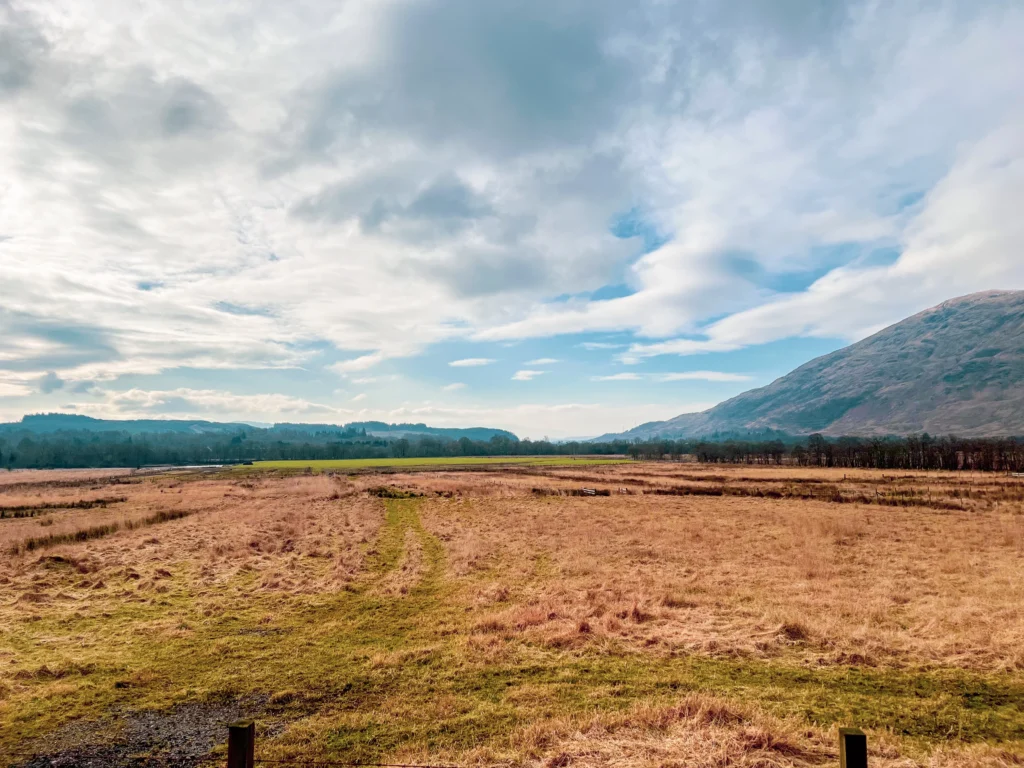
From the dam, follow the reservoir’s eastern shore, before beginning the gradual ascent of the grassy embankments to a bealach and thence to Stob Garbh, a cairned top perched on the headwall of the mountain’s eastern coire, Coire Creachainn. The traverse continues to the north of this peak, across a short dip of 250 feet to the cairn of Stob Daimh, the highest of the three peaks around the eastern coire. Those seeking only to traverse these tops may prefer the alternative approach from the Stronmilchan road, where a well-defined track, the route of an old lead-mine railway, runs along the base of the hill to Coire Ghlais. The streams in this hollow, and that of Coire Creachainn are crossed by bridges (not marked on Ordnance Survey maps) to gain the long spurs of Stob Garbh or Sròn an Isean. From Sròn an Isean, the climb to Stob Daimh is steep and uneven and in mist traverse in the reverse direction requires care, as the ridge line is difficult to detect.
Drochaid Glas - Beinn Cruachan
The next summit along the ridge, Drochaid Glas, lies directly above the basin of the reservoir and the headwalls of a northern coire. This can also bemuse, for beyond Stob Daimh a large boulder field is crossed to reach its rocky knob, which has no cairn. To add to the confusion, the summit lies slightly to the north of the main ridge line. In mist, careful navigation is required to regain the crest, particularly when traversing from west to east when it is better to leave the summit and retrace one’s steps for about 20 yards, keeping to the south side of the hill as the turn to the east is made. This helps to avoid the possibility of making a false start down the narrow. precipitous arête which falls towards Glen Noe.
The Western Tops - Beinn Cruachan
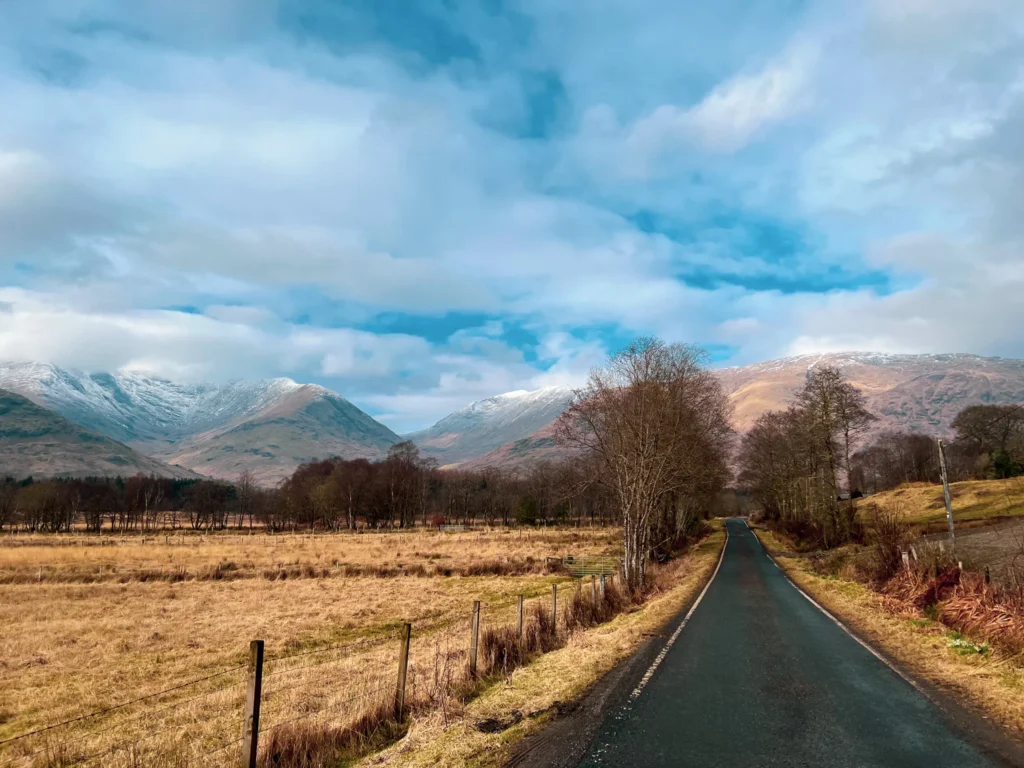
To the west of Drochaid Glas, the crest of the ridge is narrower and boulder-strewn, with large blocks appearing on the steeper ground below the main summit, where there is an Ordnance Survey pillar.
The ridge continues to a saddle and the peak of Stob Dearg, often referred to as the ‘Taynuilt peak’. When descending to this gap in trust, a move to the south should be made as if going to Meall Cuanail. Once clear of the larger stones a westerly bearing can be taken to reach the foot of Stob Dearg. This peak can also be reached on a direct ascent from the Pass of Brander. Above the western end of the pass, follow the Allt Cruiniche to open slopes below the col separating Stob Dearg from the hump of Meall nan Each to the west.
A return to the Stob Dearg – Beinn Cruachan bealach, with some re-ascent towards the latter’s summit avoids the slabby face of Coire a’ Bhachaill. An easy descent due south then finds the short rise to Meall Cuanail, and the softer grassed slopes beyond which, falling towards the Cruachan darn, speed the return to the road by the Allt Cruachan.